
Academic / Research
Research Assistant Resume Example & Guide
Research assistant applications are read by PIs and lab managers who care about one thing: can you run their methods reliably and honestly? A strong RA resume names the techniques, the analysis tools, the compliance experience, and any research output — and it never inflates a contribution, because the academic world is small and citations are checkable.
Pro Resume Builder adapts to academic work when you set your career area — methods and analysis vocabulary rather than corporate phrasing — and keeps every AI suggestion editable so your claims stay exactly as accurate as you make them.
What a strong research assistant resume shows
- Methods and techniques, named precisely. The lab techniques, field methods, or study procedures you have actually performed — pipetting and assays, interviews and coding, survey administration, behavioral protocols — whatever your discipline’s real toolkit is.
- Analysis tools with real use. R, Python, SPSS, or Stata for quantitative work; NVivo or similar for qualitative coding — tied to the analyses you ran, not just installed.
- Compliance and ethics experience. Working under IRB-approved protocols, CITI or equivalent ethics training, and consent or data-handling procedures you followed. PIs screen hard for this.
- Research output, credited honestly. Poster presentations, conference talks, and co-authorships with your actual contribution stated ("data collection and cleaning for..."), plus manuscripts in progress labeled as such.
- Literature and writing support. Literature reviews, annotated bibliographies, and citation management (Zotero, EndNote) — the unglamorous work every lab needs done well.
- Lab operations you carried. Participant recruitment and scheduling, data entry with QC, equipment and inventory upkeep, or training newer RAs — evidence you make a lab run smoother.
A good template for research assistant resumes
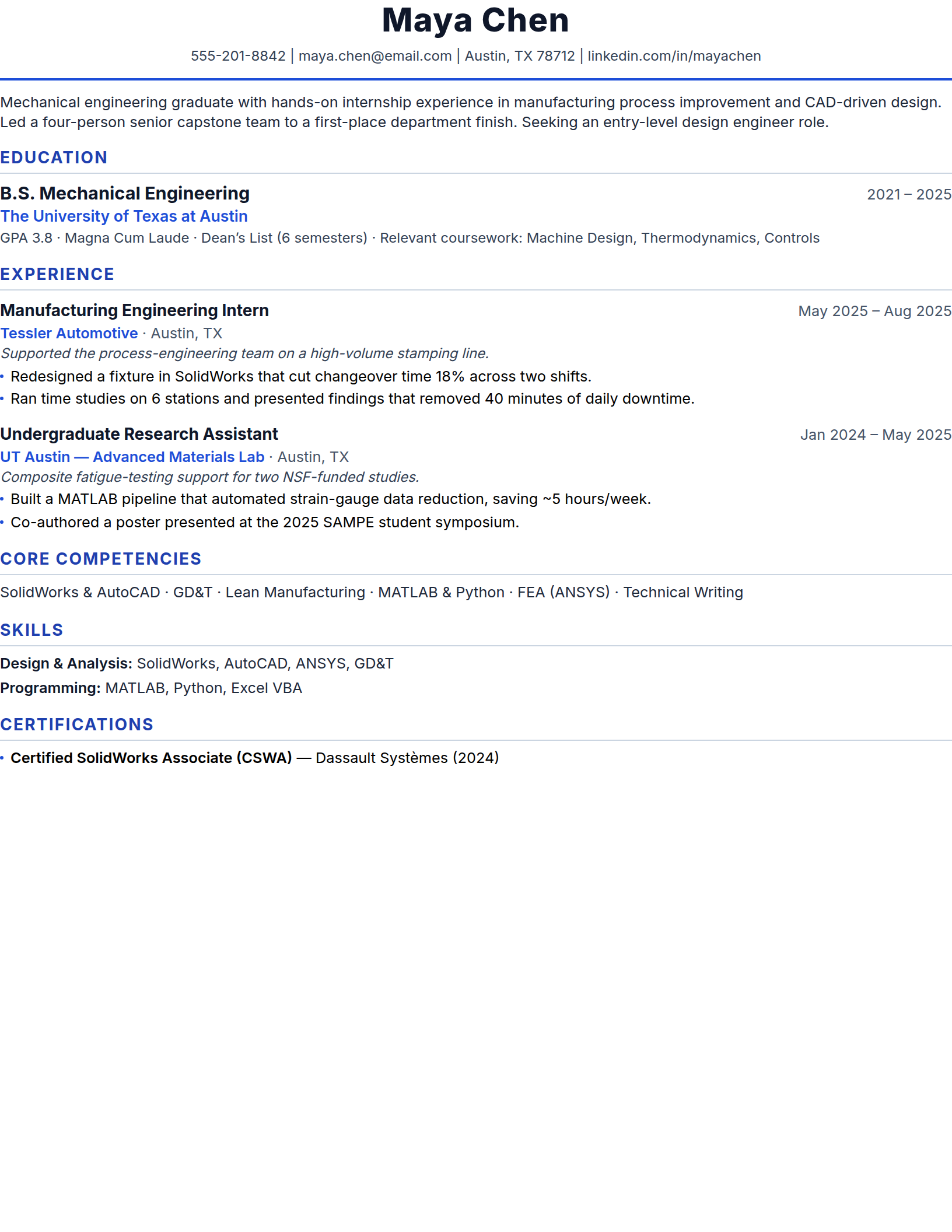
The Graduate template
The Graduate template leads with education — the right order for academic hiring, where your degree, coursework, and honors are the first thing a PI checks.
Every template is built from the same structured content, so you can switch designs without retyping anything.
Browse all templates →Frequently asked questions
How do I list a co-authored paper or poster as an RA?
Use a standard citation format with your name bolded, and add a one-line contribution note if your role was not obvious. Label status precisely: published, in press, under review, or in preparation. Never blur "in preparation" into "under review" — academics check.
I have no research experience yet — how do I get a first RA position?
Lead with relevant coursework (methods and statistics especially), class research projects, and technical skills like R or SPSS from any source. Mention ethics training if you have completed it — CITI certification is quick and signals seriousness. Many PIs hire promising students and train the rest.
CV or resume for research assistant applications?
For most RA positions a 1–2 page resume focused on research skills and output is right; a full CV becomes standard at the graduate level and beyond. If a posting says CV, include everything — presentations, all coursework, awards — and let length follow.
How technical should the methods descriptions be?
As technical as the lab you are applying to: name the specific assays, instruments, or protocols when applying within the same subfield, and add a plain-language gloss when crossing fields. Precision is the point — "conducted research" tells a PI nothing.
Build your research assistant resume with AI that speaks your field — and see how it scores against a real job posting before you apply.
Build your resumeQuestions about plans? See pricing