
Trades
HVAC Technician Resume Example & Guide
HVAC hiring starts with one question: are you EPA-certified to handle refrigerant? After that, employers look for the equipment you have actually serviced — split systems, heat pumps, rooftop units — and whether you can diagnose, not just swap parts. A strong HVAC resume answers all three in the first half page.
With your career area set to Trades, Pro Resume Builder suggests bullets in real HVAC terms — charging, diagnostics, maintenance schedules — and its ATS check shows how closely your resume matches a specific posting before you send it.
What a strong HVAC technician resume shows
- EPA Section 608 certification, front and center. State the type — Type I, II, III, or Universal — in a certifications section near the top. It is the first legal requirement most employers screen for.
- Equipment you have serviced. Split systems, heat pumps, gas furnaces, packaged rooftop units, mini-splits — named specifically, with residential vs light-commercial context.
- Real diagnostic skills. Superheat and subcooling measurement, manifold gauge work, and electrical troubleshooting of boards, capacitors, and motors — the difference between a technician and a parts-changer.
- Refrigerant and brazing work. Recovery, evacuation, and charging done to spec, plus brazing of line sets. These are the hands-on skills a service manager wants confirmed in writing.
- Service volume and independence. Calls completed per day, maintenance agreements handled, and whether you ran your own truck — plain facts that show your working level without inflated language.
- Extra credentials that move you up the stack. NATE certification, manufacturer training, and a clean driving record (most HVAC jobs put you in a company vehicle).
A good template for HVAC technician resumes
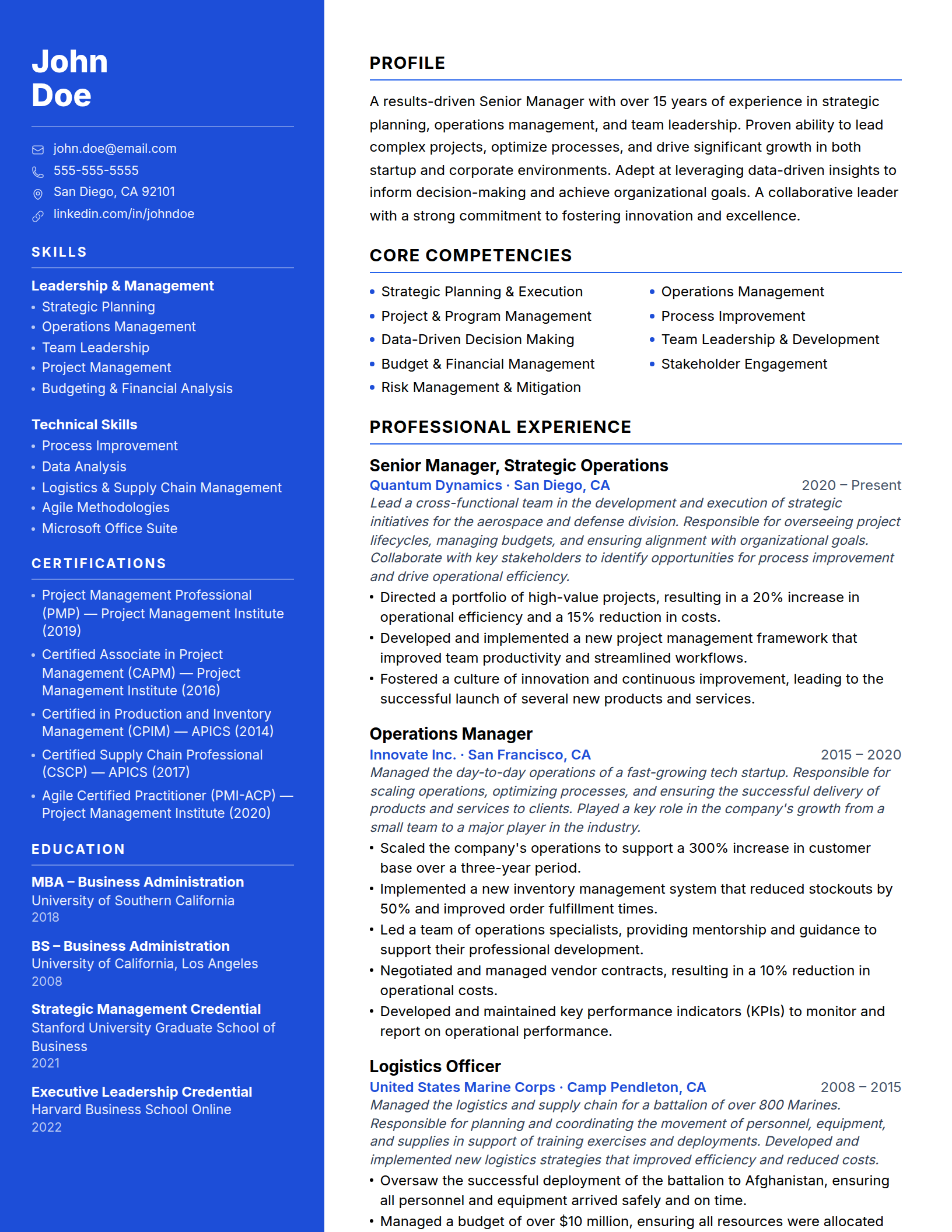
The Sidebar Professional template
The Sidebar Professional template keeps EPA 608, NATE, and your equipment skills in a scannable side column while the main column carries your service history.
Every template is built from the same structured content, so you can switch designs without retyping anything.
Browse all templates →Frequently asked questions
Where should EPA 608 certification go on my resume?
In a certifications section in the top third of the page, with the type spelled out: "EPA Section 608 — Universal". Many employers and applicant tracking systems screen for it by name, so write it exactly, not as "EPA certified".
I just finished HVAC school — what goes on my resume?
Lead with your certificate or diploma program, EPA 608 type, and any lab hours on live equipment. Include ride-along or internship time, and non-HVAC work that proves reliability. Entry-level HVAC hiring weighs certification plus dependability heavily.
Should I separate installation and service experience?
Make the split visible within each job: install crews and service techs are hired differently. A line like "60% service calls, 40% changeouts" tells a manager exactly where you fit their roster.
Do I need to list refrigerant types I have worked with?
It helps, especially with the industry transition to newer refrigerants. Listing experience with R-410A and R-22 phase-out work, or newer A2L systems if you have real training on them, shows you are current. Only list what you have genuinely handled.
Build your HVAC technician resume with AI that speaks your field — and see how it scores against a real job posting before you apply.
Build your resumeQuestions about plans? See pricing