
Technology
Data Analyst Resume Example & Guide
Data analyst resumes are screened for tools first — SQL, Python or R, a BI platform — but hired on the second read: did your analysis change a decision? The strongest analyst resumes pair a credible technical stack with specific analyses and what the business did because of them.
Pro Resume Builder drafts bullets from your real experience and keeps every claim editable, and its ATS check scores your resume against a specific posting — a sensible first step in a field where screening software filters most applications.
What a strong data analyst resume shows
- SQL depth, stated concretely. The work you actually do in SQL — joins across large schemas, window functions, query optimization — not just the keyword. SQL is the most common analyst screening filter.
- A real analysis toolkit. Python (pandas) or R for analysis, plus advanced spreadsheet work where it is honest — much of the business still runs on Excel and pretending otherwise fools no one.
- BI tools with usage evidence. Tableau, Power BI, or Looker dashboards that people actually used — who consumed them and for what decision, not just "built dashboards".
- Analyses that moved a decision. A/B test readouts, cohort analyses, forecasts, or deep dives — each tied to what changed afterward. "Analysis led ops to consolidate two warehouses" is the sentence hiring managers reread.
- Data hygiene work. Cleaning, validation, and pipeline or data-model contributions. Unsexy, but every experienced analyst knows it is most of the job — claiming it builds credibility.
- Communication artifacts. Stakeholder reports, executive summaries, or recurring reviews you ran. Analysis only counts when a decision-maker understood it.
A good template for data analyst resumes
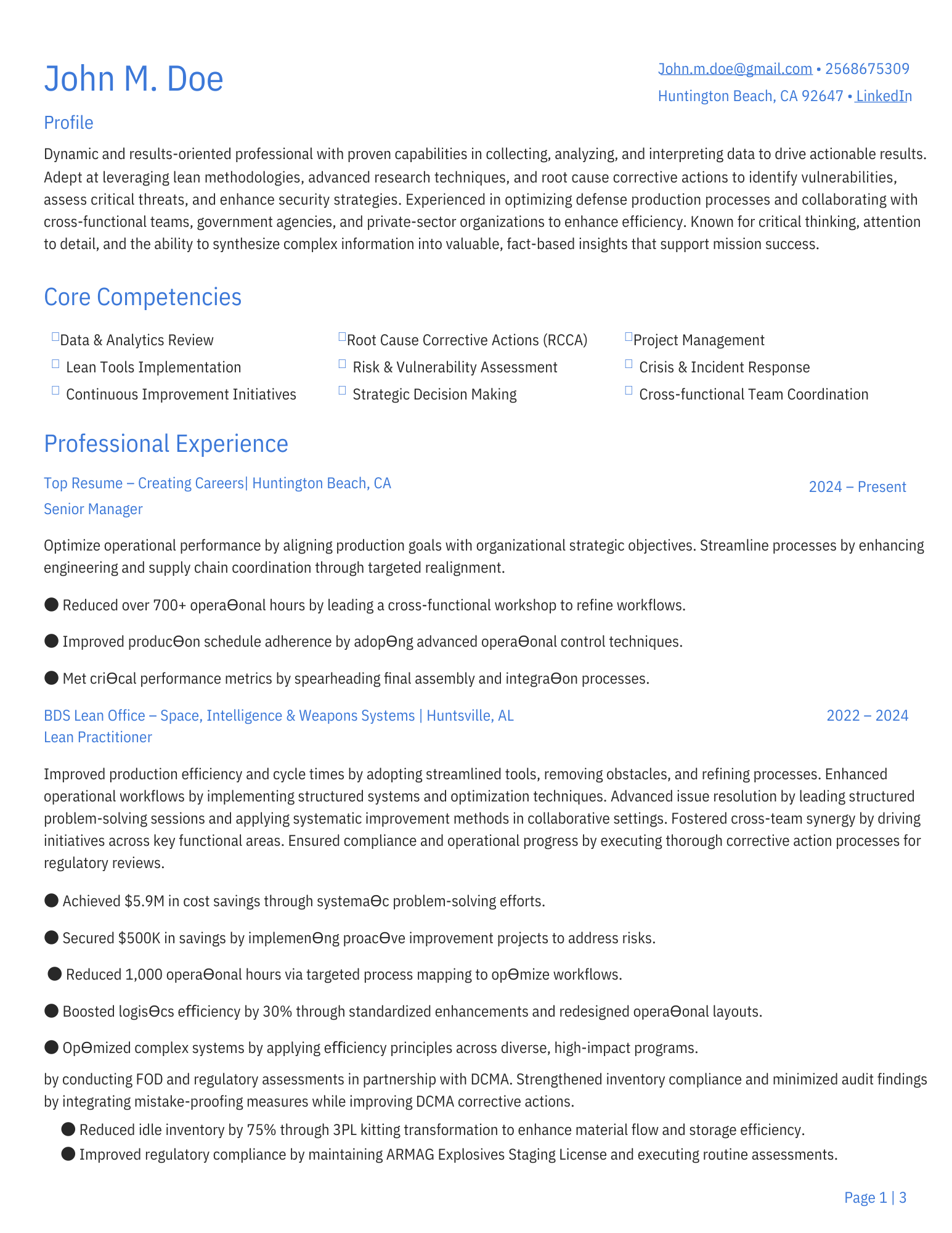
The Modern template
The Modern template’s Core Competencies section surfaces your SQL/Python/BI stack immediately, with structured experience entries underneath for the analyses that used it.
Every template is built from the same structured content, so you can switch designs without retyping anything.
Browse all templates →Frequently asked questions
What skills should lead a data analyst resume?
SQL first — it is the near-universal screening requirement — then your analysis language (Python or R), your BI tool, and spreadsheets. Order them by genuine depth, because interviews probe exactly this list in exactly this order.
How do I quantify impact honestly as an analyst?
Attribute carefully: you usually informed a decision rather than caused the revenue. "Identified churn concentration in one plan tier; retention team re-priced it" credits your real contribution without claiming the outcome was yours alone — and it survives interview scrutiny.
Do I need a portfolio as a data analyst?
It helps most early-career: two or three projects with real (or realistically messy public) data, a clear question, and a readable writeup. Link it from the resume. For experienced analysts, specific work bullets usually carry more weight than a portfolio.
Analyst vs data scientist — how should my resume choose?
Match the title reality of the work you want: analyst resumes emphasize SQL, BI, and decision support; data-science resumes emphasize modeling and statistics. Splitting the difference dilutes both. Tailor per posting — the same history can honestly support either emphasis.
Build your data analyst resume with AI that speaks your field — and see how it scores against a real job posting before you apply.
Build your resumeQuestions about plans? See pricing